Hugo Hansen · 17 September 2026
Historic Sites Adopt Bioluminescent Signage Amid Rare Earth Shortages in Restoration Work
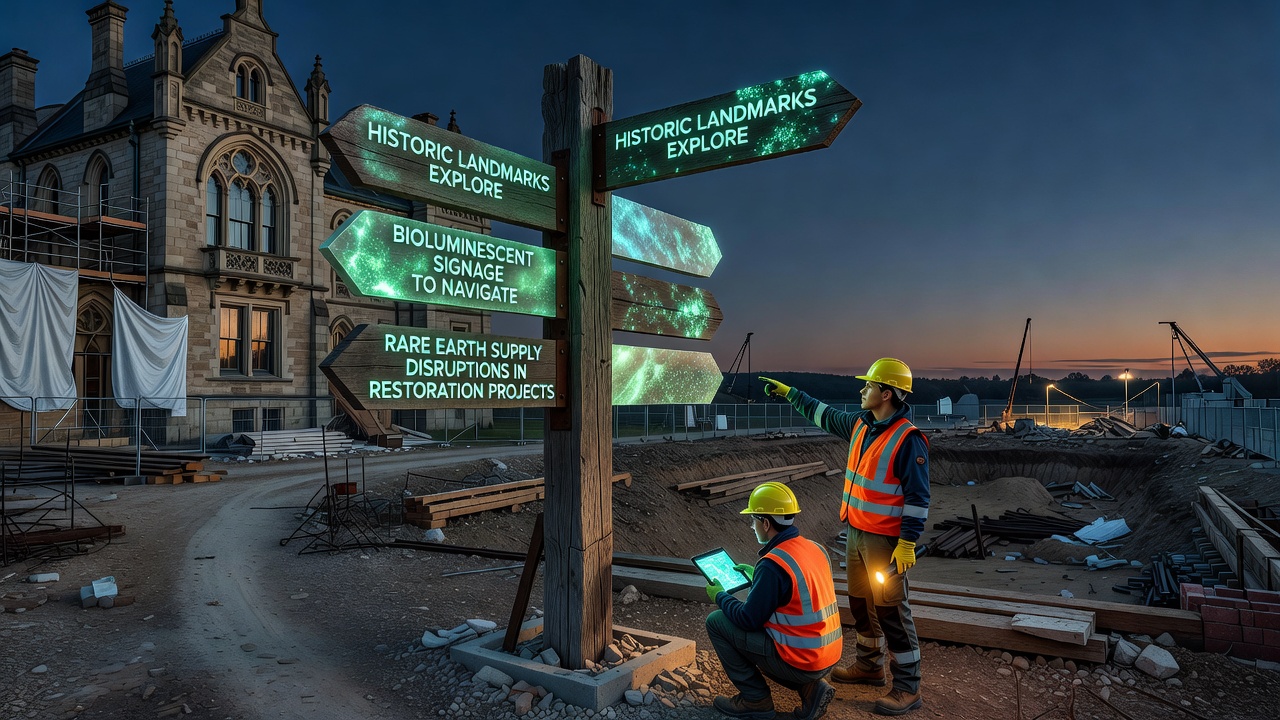
Restoration teams at heritage locations face mounting pressure from restricted access to rare earth elements that power conventional LED systems, and many have begun testing bioluminescent alternatives for directional signage and interpretive displays. Supply chains for elements such as europium and terbium experienced repeated interruptions after 2023 when major producers adjusted export quotas, according to data from the United States Geological Survey. These materials remain essential for phosphor coatings that deliver consistent light output in standard fixtures, yet heritage projects must preserve original materials and avoid modern intrusions that could alter structural integrity.
Supply Constraints Shape Project Timelines
Procurement records show that lead times for specialized LED components stretched from weeks to more than nine months in several documented European and North American sites between 2024 and 2025. Project managers at cathedrals, manor houses, and industrial heritage parks reported that replacement fixtures requiring rare earth phosphors could not be sourced in sufficient quantities without delaying scheduled public openings. Engineers therefore examined organisms capable of producing light through chemical reactions, including strains of Vibrio bacteria and certain fungi that emit steady green or blue-green illumination under controlled humidity and temperature conditions.
Researchers at the University of Cambridge published findings in late 2025 demonstrating that engineered bacterial films could maintain visible output for up to 72 hours on nutrient substrates refreshed weekly. These films require no electrical wiring beyond occasional misting systems, which reduces both material demands and the risk of damage to delicate masonry during installation.
Integration Methods in Sensitive Structures
Conservation guidelines from the International Council on Monuments and Sites emphasize reversible interventions, and bioluminescent panels meet this standard because they adhere with low-tack gels rather than mechanical fasteners. At one 18th-century warehouse conversion in northern England, technicians embedded thin agar sheets containing Photobacterium phosphoreum behind existing iron signage, allowing the original lettering to remain visible while providing a soft nighttime glow that meets accessibility standards without additional cabling.
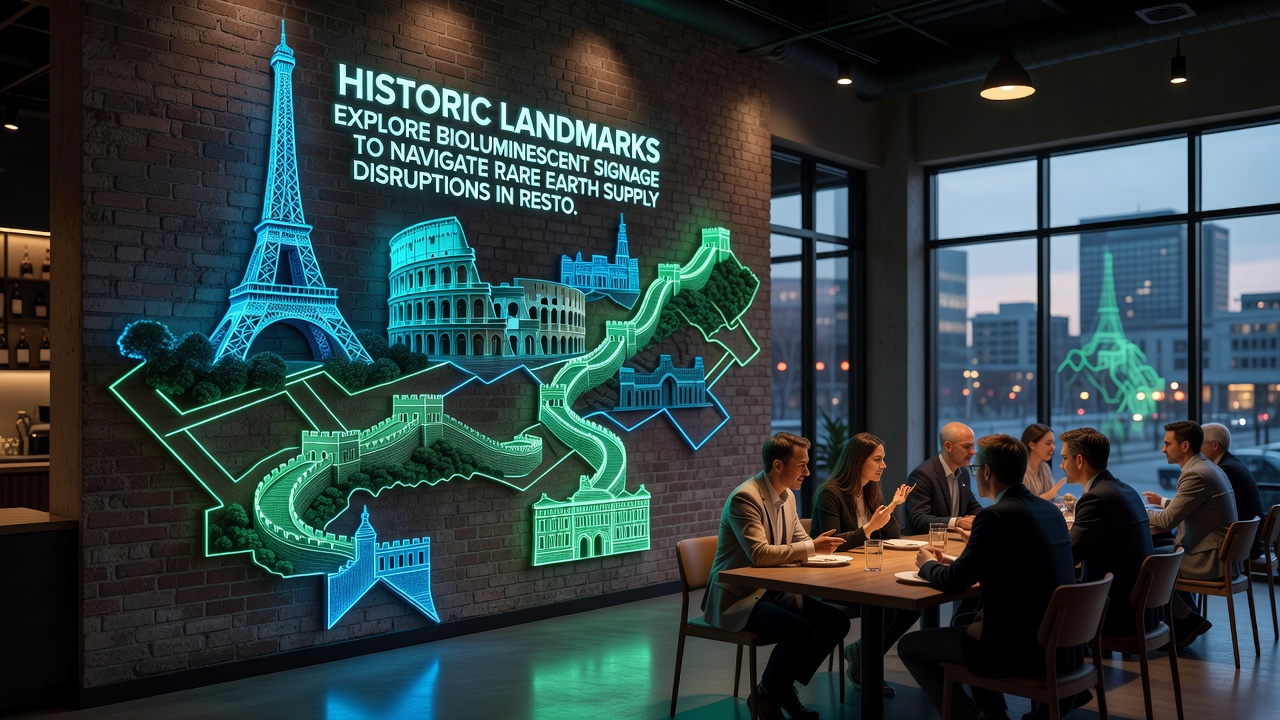
Similar approaches appear in Australian heritage sites where state heritage offices approved trials using fungal cultures on sandstone walls. The Australian Department of Climate Change, Energy, the Environment and Water issued updated technical notes in mid-2025 that outline humidity thresholds and substrate sterilization protocols to prevent unwanted microbial growth. These notes stress that cultures must remain contained within sealed polymer membranes so that no living material contacts historic fabric directly.
September 2026 Milestones and Regulatory Context
Planning documents indicate that an international workshop scheduled for September 2026 at the Getty Conservation Institute will review performance data from the first full year of bioluminescent installations across multiple continents. Participants expect to compare luminous efficacy measurements, maintenance intervals, and visitor feedback collected at sites in Canada, Japan, and the United Kingdom. Early summaries circulated among participating institutions note that average maintenance labor hours per square meter have fallen below those required for LED arrays once the initial culture establishment phase concludes.
Standards bodies continue to evaluate whether bioluminescent output meets current accessibility codes for wayfinding in low-light environments. Draft revisions circulated by the European Committee for Standardization propose minimum luminance values that several cultured strains already exceed under optimized conditions, while still allowing for the lower overall brightness preferred in protected interiors.
Material Science Developments
Laboratory teams have refined encapsulation techniques that extend culture viability from days to months by incorporating slow-release nutrient gels. A 2025 report from the Technical University of Delft described a layered membrane system that maintains stable light output across temperature fluctuations between 12 °C and 28 °C, a range typical inside unheated historic buildings. The same report recorded that peak brightness occurs approximately 18 hours after each nutrient refresh, after which output declines gradually until the next cycle.
These technical parameters allow restoration schedules to incorporate routine maintenance during regular cleaning cycles rather than requiring separate contractor visits. Facilities managers at several sites have therefore adjusted annual budgets to allocate smaller portions toward lighting upkeep once bioluminescent systems replace conventional fixtures.
Conclusion
Heritage organizations continue to monitor supply forecasts for rare earth elements while expanding the range of bioluminescent applications tested at protected sites. Data collected through 2026 will inform whether these living-light systems become standard components in future restoration specifications or remain specialized solutions reserved for locations with the most acute procurement challenges.